

Hericenones and Erinacines: Lion's Mane's Signature Compounds Explained
FROM KINKATSUDO
A daily mushroom habit, in two capsules
Kinkatsudo is a small mushroom supplement brand run by a married couple in Japan. We make two extract capsules from mushroom fruiting bodies only, with no mycelium or grain filler.
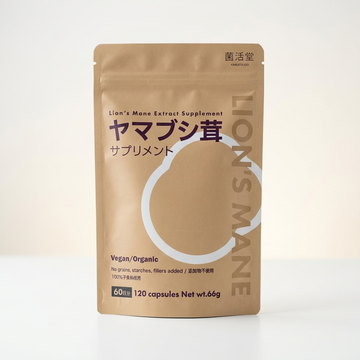
Lion's Mane Extract Capsules
- 100% fruiting body
- Hot water + alcohol extract
- 430 mg extract per capsule
¥3,980 · 120 capsules, about 60 days (about ¥66/day)
See Lion's Mane →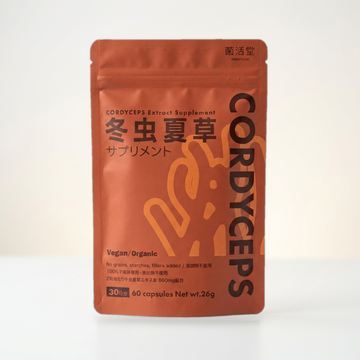
Cordyceps Extract Capsules
- 100% Cordyceps militaris fruiting body
- Grown indoors without insects
- 430 mg extract per capsule
¥3,880 · 60 capsules, about 30 days (about ¥129/day)
See Cordyceps →Free shipping in Japan · Ships from Japan · Made in China in a GMP-certified facility
Enjoying Lion's Mane
You can enjoy lion's mane fresh or dried in cooking, or as a supplement. Kinkatsudo's Lion's Mane Extract Capsules are made from 100% fruiting body in a GMP-certified facility, and the raw material is third-party tested by our supplier.
Before You Start
- Mushroom allergy: avoid lion's mane if you are allergic to mushrooms.
- Medications or health conditions: check with your doctor or pharmacist first.
- Pregnancy and breastfeeding: there isn't enough safety data, so it's best to avoid it.
- If you feel unwell, stop taking it and consult a healthcare professional.
Key Takeaways
- Hericenones are found mainly in the fruiting body; erinacines mainly in the mycelium.
- The source on the label tells you which compounds a product contains.
- Research is mostly in cells and animals; human studies are limited.
よくある質問
Does Kinkatsudo use fruiting body or mycelium?
Kinkatsudo's Lion's Mane Extract Capsules are made from 100% fruiting body.
How much should I take?
Follow the daily amount on your product's label. Lion's mane is a food, so there is no set period; just enjoy it consistently as part of your routine.
Recommended Products
Looking to incorporate these benefits into your routine? Check out these products from Kinkatsudo:
This product is not intended to diagnose, treat, cure, or prevent any disease.